Beginners
No prior study needed. The first modules assume nothing, and you build from definitions to full arguments one module at a time.
Critical thinking · 40 modules · 40 essays
From first words to first principles.
Self-paced, but interactive. Your instructor teaches each slide by voice, asks you a question, then waits. Answer out loud, or park the question for later. Say "next" or click Next when you are ready. Forty modules. Forty essays, one after every module, drafted from what you said and finished by you.
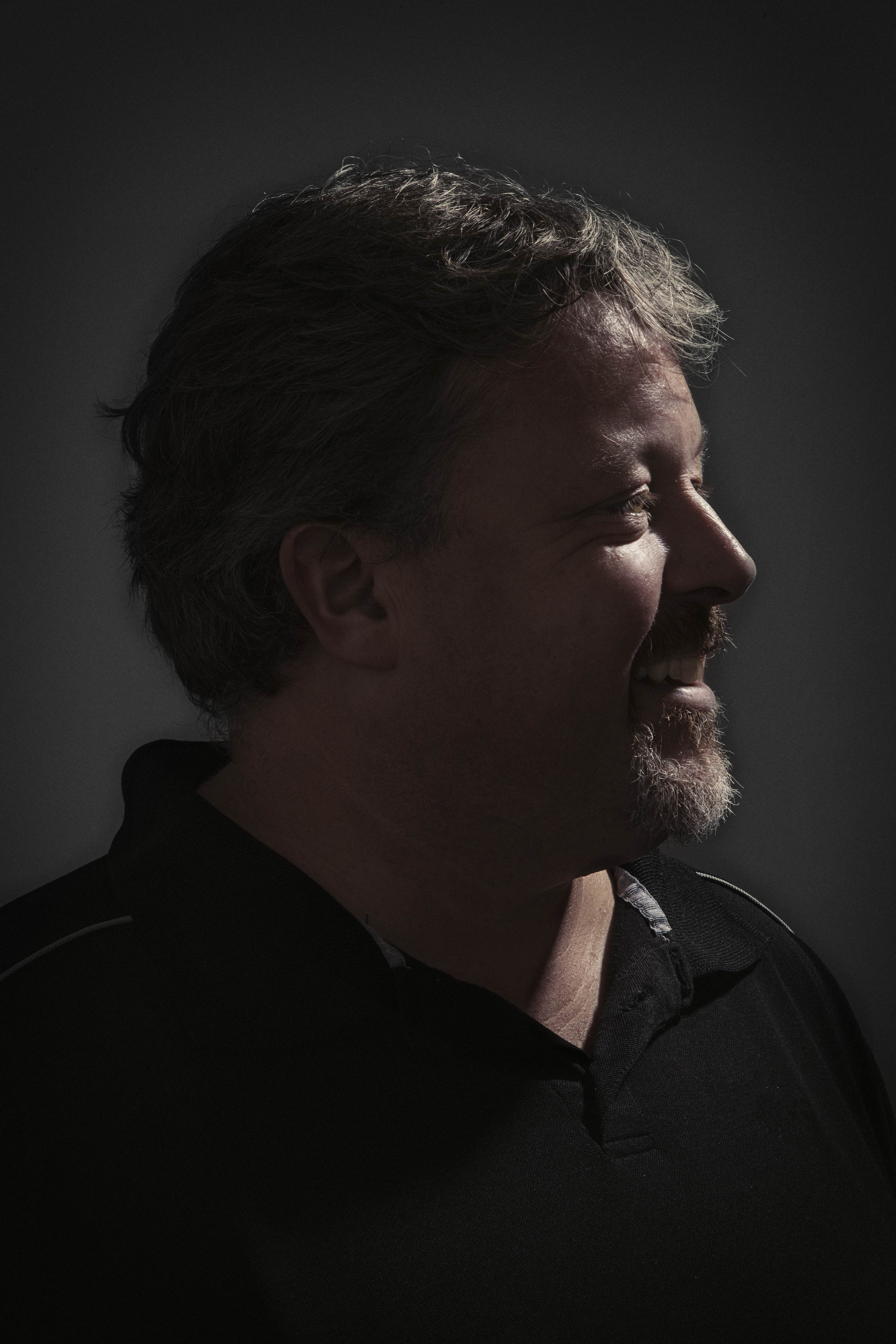
You are taught by an authorized recreation of Steve Outtrim, built from his own work. It is not a live human lecture, and not a video that plays ahead of you.
Who it is for
No prior study needed. The first modules assume nothing, and you build from definitions to full arguments one module at a time.
If your work depends on reading claims, persuading others, or deciding under uncertainty, every module ends in an essay that puts it to work, often on a real case from your own life or work.
Several essays have you question an AI directly: grade its arguments, audit its proofs, test its confidence, and resist machine-made persuasion.
How it runs
The instructor stays on the slide you are on and talks with you. This is not a pre-recorded lecture.
By voice. The instructor teaches the slide you are on, asks its question, and waits for you.
Answer the question, or park it for later. Say "next" or click Next. Nothing auto-plays past you.
After every module we draft your essay from what you said. You edit it and submit it in the classroom. Judged for argument, not polish.
Essays
After every module we draft your essay from what you said in the discussion. You edit it and submit it in the classroom. Be proud of the writing. Forty essays is completion.
Each essay is 800 to 1,200 words, with a minimum of 400 to submit.
Each submitted essay gets a score out of 10, with written notes on its strengths and what to improve. A score of 5.0 passes.
A certificate may be claimed when 20 of 40 essays score at least 5.0 out of 10. That is eligibility, not the goal. Keep going.
Signed Steve Outtrim, CEO & Co-Founder, Dynamic Experts.
Before you enroll
Who is teaching you?
Steve Outtrim's own work grounds the recreation that teaches this course. It teaches each slide, takes your questions as you go, and never pretends to be the man himself.
The recreation teaches from Steve Outtrim's own work.
It teaches the slide you are on and waits for you. Ask your own questions as you go.
What you talk to is our AI, not Steve, and the course says so plainly.
You are taught by an authorized recreation of Steve Outtrim, built from his own work. It is not a live human lecture, and not a video that plays ahead of you.
Instructor
Your instructor. CEO & Co-Founder, Dynamic Experts. Teaches all forty modules.
Some modules study the ideas of a historical thinker. Steve teaches those modules too, in his own voice. Nobody speaks as the thinker, and none of them, or their estates, approved this course. Check what you hear against the sources.
Syllabus · 40 modules
What you will be able to do after each arc, and the essay every module ends in.
Define your terms, spot ambiguity and vagueness, and audit the names an institution uses.
EssayDescribe, in your own words, one belief you hold that you have never examined. Where did it come from? What words do you use when you state it to yourself, and are those words yours, or borrowed? Do not argue the belief is true or false; the task is to watch yourself holding it and report what you see, precisely.
EssayChoose one contested word from public life (examples: "fair," "natural," "violence," "intelligence," or your own). Give a reportive definition, then two rival stipulative definitions that different sides actually use. Show, with the counterexample test, what each definition includes and excludes, and then say plainly what each side gains by its definition. End by stipulating and defending your own working definition.
EssayAsk an AI to classify ten things you name (mix easy and hard cases: a tomato, a virus, cryptocurrency, a national anthem, a chess opening…) into categories it chooses. Then write your critique: Which categories were found and which made? Where did it misfile a case, and why? What purpose was its category system serving that yours doesn't? Teach it your correction, record its revised sorting verbatim, and evaluate the revision: did it actually understand the principle, or just comply? (Include the key exchanges as quoted material; quotes don't count toward your word total.)
EssayPerform a rectification audit on one institution you know personally (a workplace, a school, a family, an online community). Identify three names in daily use there (titles, labels, or slogans) and for each, state what the name promises, what the reality delivers, and what Analects 13.3 predicts will follow from the gap. Close with the harder question: to rectify, should the conduct change to match the name, or the name change to match the conduct? And who decides?
EssayTake one real document you've received that mattered to you (a job posting, a landlord's notice, a politician's promise, terms of service; quote it). Identify every ambiguity, vagueness, and weasel construction in it. For each: is it innocent or strategic, and how can you tell? Rewrite the document's key passage at the precision the stakes actually demand, and state what the rewrite would cost its author.
Tell a valid argument from a true one, test a syllogism, and use deduction, induction, and abduction on purpose.
EssayTake the provided passage (a 300-word opinion excerpt supplied with this module). (1) List every distinct proposition it asserts, numbered. (2) Mark each as simple or compound, and identify the connectives. (3) Identify two sentences that are not propositions and say what speech act each performs. (4) Identify one proposition the author implies but never states, and say how you detected it. Then defend your extraction in prose: where were the judgment calls? SOURCE MATERIAL FOR THIS MODULE: Everyone knows this city is dying. Look around: the shops on Main Street are boarded up, the young people have left, and the mayor keeps talking about "revitalization" as if saying the word could reopen a mill. We need leadership, not more studies. Stop the consultants. Cut the tax that is strangling small business. If you care about this town, you will vote for change in November. The old guard had their chance. They failed. Ask anyone at the diner. The future is obvious if you are honest enough to see it.
EssayThree tasks. (1) Construct two original valid syllogisms from your own life (not textbook examples), labeling all terms. (2) Construct one invalid syllogism that sounds persuasive, and name its exact breakage. (3) Take the provided editorial excerpt, translate its core argument into syllogistic form, surface the suppressed premise, and assess: is the suppressed premise the argument's weakest point? Defend your translation choices. SOURCE MATERIAL FOR THIS MODULE: The council should reject the waterfront stadium. Stadiums do not pay for themselves: look at three cities that built them and still cut library hours. The developer is a politician, so we cannot trust the revenue model. Anyone who wants this project wants to privatize the waterfront. Vote no and keep the city honest.
EssayPrompt an AI to give you its best argument for a conclusion you believe is FALSE (choose one you genuinely reject). (1) Grade its argument on both axes: is it valid? are the premises true? Quote the argument. (2) Teach the AI the validity/soundness distinction in your own words and ask it to re-grade its own argument. (3) Critique its self-grade: did it correctly locate the weakness, or did it capitulate to you without understanding? Conclude with what this taught you about when to trust machine reasoning. (Quotes excluded from word count.)
EssayUse the fictional East Dock warehouse case supplied below. (1) Draw one deductive, two inductive, and two abductive inferences from the observations. Label each one, cite the numbered observations it rests on, and state exactly how confident it entitles you to be. (2) For your best explanation of the discrepancy, generate two rival explanations and say what evidence would separate them. (3) Identify the one observation doing the most work in your conclusions, and say what happens to them if it is unreliable. Close with one engine crash you catch in your own reasoning (a broken form, a hasty generalization, or a satisfying story mistaken for the only story), what it lets you avoid examining, and how you will catch it next time. You are assessed on accurate labels, honest confidence, and the quality of your rivals, not on a verdict about who took the pallets. SOURCE MATERIAL FOR THIS MODULE: Fictional case for reasoning practice; a discrepancy does not establish theft. Ten observations from the East Dock warehouse, Tuesday 14:00–18:00. 1. The 15:00 cycle-count sheet for bay 7 is missing from the clipboard. 2. Bay 7's scanner log shows 40 pallets inbound at 15:12 and 38 pallets outbound at 16:40. 3. Supervisor Ren was in a closed-door meeting 14:30–16:00 (calendar confirmed). 4. Temp worker Cole was assigned to bay 7 after 15:00 (roster). 5. Cole's badge pinged the south gate at 16:52. 6. Two pallets of lithium batteries are unaccounted for in the nightly exception report. 7. The exception report was filed by Ren at 18:10. 8. A contractor van was logged at the south gate 16:48–17:05, destination "electrical repair," no work order on file. 9. Cole told the night lead, "Ren said to skip the count; we're behind." 10. Ren denies giving that instruction. There is no written order.
EssayLovelace wrote that the Engine "can do whatever we know how to order it to perform": it originates nothing. Assess this claim against the AI systems of your own day. First steelman the view that modern AI has refuted her; then steelman the view that she is still right and the appearance of origination is ordering at one remove. Declare your verdict and, most importantly, state what evidence would change your mind. (You may converse with an AI as evidence; quote it.)
Take persuasion apart into ethos, pathos, and logos, build a case for a specific audience, question a belief Socratically, and steelman a view you reject.
EssayFind one piece of persuasion that worked on you recently (an ad, a speech, a post, a sermon; quote or describe it). Decompose it into ethos, pathos, and logos, sentence by sentence where possible. Judge: was the mix honest for the claim being made? Then rewrite its core message twice (once as pure logos, once with the mix you believe the claim deserves) and reflect on what each version gains and loses.
EssayChoose one claim you genuinely want someone in your life to accept. Write the four-axis scan for three real audiences (name their roles, not their names). Then write the opening 150 words of your case to each audience. Conclude with an honesty audit: point to the exact places where you adapted, and prove to a skeptical reader that no assertion changed, only the fit.
EssayAsk an AI to argue a case for a position of your choosing. Then perform a building inspection in writing: identify its claim, reasons, evidence, warrants (stated or missing), qualifiers, and rebuttal section (present or absent). Issue your inspection report, every missing beam named. Then teach it: give the AI your report and ask it to rebuild the case. Grade the rebuild: which deficiencies did it truly repair, which did it paper over? (Quotes excluded from word count.)
EssayConduct and transcribe a real Socratic dialogue: question a willing person (or an AI, but then say so and adjust your reflection accordingly) about one belief they hold confidently, using the five-probe ladder at least once per rung. Then write the examination of your examination: where did you lead instead of follow? Where did aporia appear, and how did your interlocutor (and you) handle it? What did the belief look like afterward? (Transcript excluded from word count.)
EssayChoose a position you disagree with strongly (real, current, and held by serious people). Write its steelman: a statement its holders would endorse, with its weakest arguments repaired to their strongest available forms. Aim to pass the ideological Turing test. Then, and only then, write your response to that best version. Conclude honestly: did your own position change shape under the exercise, and where is it now weakest?
Make Fermi estimates, reason about rates and base rates, check a proof line by line, and audit a model that affects your life.
EssayComplete the provided exercise set: (1) three Fermi estimates (supplied with this module), each with decomposition shown and error bounds stated; (2) the provided news graphic: identify every numerical distortion and re-state the honest finding; (3) classify ten supplied numbers by pedigree (counted/measured/estimated/modeled) with one-line justifications. Then write a short reflection: which fraud are you most susceptible to, and what checkpoint will you install? SOURCE MATERIAL FOR THIS MODULE: Fermi 1: How many piano tuners work in Chicago? Fermi 2: How many red lights does a typical US driver pass in a year? Fermi 3: How many hardcover books could fit in a standard 20-foot shipping container? News graphic (described): bar chart titled "Violent crime explodes 40%." Y-axis starts at 8,200 incidents, ends at 9,000. Two bars: 2023 = 8,400; 2024 = 8,736. Caption: "City data." No population adjustment. A callout: "That's 336 more victims." Ten numbers to pedigree: A. 336 (the callout) B. 8,736 (2024 incidents) C. 40% (headline) D. 98.6°F (a reported fever) E. 47,000 (estimated crowd at a rally) F. 2.4% (modeled unemployment next quarter) G. 12 (counted empty chairs in a meeting) H. 3.1415926535 (printed on a mug) I. 19,500 (city population in the last census) J. 12,000 mAh (battery printed on a pack)
EssayComplete the provided problem set: (1) the base-rate hospital problem (supplied): full calculation with each step explained in prose a beginner could follow; (2) the supplied pair of headlines describing the same statistic: identify the costume, the denominator, and the base-rate context each omits; (3) re-express one statistic from your own life three ways (fraction, rate, per-capita) and say which is honest for which purpose. Close by explaining, to an imagined friend, why the 99%-accurate-test result doesn't mean what they fear. SOURCE MATERIAL FOR THIS MODULE: Hospital problem: A disease has prevalence 1 in 10,000 in a tested population. A test is 99% accurate in both directions (99% true positive if diseased; 99% true negative if healthy). You test positive. What is the approximate chance you have the disease? Headline pair about the same underlying statistic (support for a policy fell from 40% of those polled to 30%): H1: "Support collapses 25%." H2: "Support slips 10 points; still nearly a third."
EssayAsk an AI to prove a simple claim (suggested: the sum of two odd numbers is even; or the triangle angle sum; your choice). Audit its proof line by line: mark each step as axiom, definition, prior result, or unjustified leap. Then deliberately challenge it: ask it to prove a false near-neighbor claim and observe what it produces. Teach it your audit standard and have it re-derive the true proof with every step cited. Write up: what distinguishes its proof-shaped text from a proof, and what did the false-claim probe reveal? (Transcripts excluded from word count.)
EssayTake one substantial task from your own life (past or upcoming). Design its division of mental labor as de Prony would: specify the three floors (what requires judgment, what requires method, what requires only execution) and state which floor(s) you would now delegate to an AI, with the checking regime you would impose (remember: one flawed formula, ten thousand corrupted entries). Then argue the counter-case: what does the undivided version of this task teach its doer that your division destroys, and is the trade worth it?
EssayChoose one model that affects your life (a credit score, a weather app, a fitness tracker's calorie model, an economic forecast cited in the news, or an AI assistant). Run the full three-part audit: its question, its simplifications, its domain of validity. Document one case (real or carefully reasoned) where it is used off-map, and trace the consequences. Finish by proposing the warning label this model should carry, written for a beginner.
Update a belief by degrees, catch your own biases, calibrate your confidence, write a decision memo, and map a disagreement to its crux.
EssayComplete the provided exercise, then reflect. (1) The supplied three-scenario problem set: for each, state the prior, assess the evidence's diagnosticity in prose, and give your posterior with reasoning (numbers may be rough; the logic is graded). (2) Then: choose one real belief of yours, log its current confidence, identify the strongest evidence for and against, and compute, honestly, where the dial should sit versus where it does. Explain any gap. SOURCE MATERIAL FOR THIS MODULE: Scenario 1: A friend usually replies to texts within an hour when free. It has been four hours. You fear they are angry. Scenario 2: A medical screening test, prevalence 1/10,000, 99% accurate both ways, positive result (same numbers as M17, now in Bayesian dress). Scenario 3: A startup claims a new battery lasts 10× longer. You see one impressive demo video and a famous investor's name on a slide.
EssayKeep a bias journal for three days. Log five candidate incidents where a bias may have fired in your own judgment: name the trigger situation, the fast answer, and what the slow check would have said. For your two clearest cases, design a structural countermeasure (not "be more careful", but a checklist item, a rule, a second-opinion protocol). Conclude: which single bias, if you fixed only one, would most change your life, and why that one?
EssayRun a calibration session with an AI. (1) Pose it 15 factual questions you can verify (design them yourself; include some obscure ones), demanding a confidence percentage with each answer. Score it: how does stated confidence match its actual hit rate? (2) Teach it calibration: explain the discipline, then re-pose five new questions asking for calibrated confidence with stated reasons and what-would-change-my-mind notes. (3) Evaluate: did its calibration behavior actually improve, or did it perform humility? Close with your own plan: how you will keep score on yourself this year. (Q&A transcripts excluded from word count.)
EssayWrite a real decision memo for a decision you currently face (choose one with genuine stakes but shareable content). Include: the options (minimum three; force the third), your information state with confidence dials, reversibility classification, expected-value sketch where numbers apply and explicit acknowledgment where they don't, a pre-mortem (M23), and pre-registered criteria for judging the decision in six months without resulting. Then decide (on paper) and defend the choice against your own strongest objection.
EssayMap a real disagreement you are (or were) part of: draw the full argument map for both sides (a described map in structured text is acceptable; a drawn one may be attached), identify the crux, and state your double-crux: the evidence that would move you. Then write the mind-change you would deliver if that evidence arrived, using the module's public-update protocol, verbatim, as you would say it. Conclude: what makes that paragraph hard to say, and which of this arc's tools most reduces the cost?
Recognize motivated reasoning, propaganda techniques, dark patterns, and machine-made persuasion, and trace a claim back to its primary source.
EssaySun Tzu wrote that all warfare is based on deception. This module argued that inquiry is not warfare, and that the Sophists of Athens blurred the two. Choose one real setting in your life or work where persuasion and inquiry meet: a negotiation, a meeting, a family argument, or a feed you read. (1) Diagnose the room: is it a battlefield, a seminar, or one that changed partway through? Give the evidence. (2) Run the four-question sophist detection kit (who pays, what happens if they are wrong, do they ever concede, can they state the other side) on one eloquent voice in that setting, including your own. (3) Grade the information terrain you relied on: what was confirmed, what was rumor, and what might have been planted? Conclude with your verdict on Sun Tzu's lens: what in The Art of War sharpens truth-seeking, what must stay on the battlefield, and the test you will use next time to tell an inquirer from a manipulator when both are eloquent.
EssayChoose one belief you hold that your social circle also holds (make it one with real stakes). Run the full audit in writing: (1) the honest genealogy: how did you come to hold it, evidence-first or membership-first? (2) the outsider test: the strongest opposing argument with labels swapped; (3) consider-the-opposite: three reasons you might be wrong, generated in good faith; (4) the two-questions separation: what would it cost you if false, and how much is that cost steering the verdict? You are graded on the visible honesty of the process, not on changing your mind.
EssayCommission and dissect. (1) Ask an AI to write a persuasive text on a harmless topic (e.g., "pineapple belongs on pizza," "cats over dogs") using maximum persuasion. (2) Dissect its output with the toolkit: tag every technique it used, including the ones it used without being asked. (3) Teach it the education/advocacy/propaganda distinction and ask it to rewrite the piece as honest advocacy. (4) Grade the rewrite: what changed, what merely hid? Conclude: which technique survived the rewrite, and what does that teach about machine persuasion defaults? (Texts excluded from word count.)
EssayPerform a supply-chain autopsy on one claim that reached you through a feed (choose one that moved you: outrage, fear, or vindication). Trace every hop to the primary source; document what each hop added, removed, or reframed; run the arc-4 number probes if statistics are involved; and log the dark patterns in the interfaces that delivered it. Verdict: what survived the trip? Close with two concrete gates you will add to your own information diet, and what each gate costs you.
EssayWrite the defense manual you will actually follow. Cover: your provenance reflexes (concretely, what you check, when), your technique-tagging triggers (which content classes get inspected), your crowd-verification protocol, and your rate-limits (specific, schedulable). Then the honest section: identify two attack classes your manual cannot stop as an individual, and argue what collective or institutional response each requires. You are graded on operational specificity (M5) and on the honesty of the limits section.
Put the questions of the first philosophers, Athens, the Stoics, Confucius, and the ethicists to work on your own choices.
EssayTake Heraclitus vs Parmenides as a live debate, not a museum piece. State each position in your own words with its strongest supporting argument (M15's steelman). Then find the modern echo: identify one contemporary dispute (in science, identity, or technology) that replays flux-vs-permanence, and show the mapping explicitly. Conclude: which ancient, if either, does the modern evidence favor, and what would Zeno's protocol (take the absurd argument seriously; find the deep premise) say about your answer?
EssayRetell the cave allegory in a fully modern setting of your own construction (a feed, a workplace, a fandom, an industry; your choice), mapping every element: shadows, chains, fire, the climb, the sun, the return. Then break the allegory: identify the one place where your modern mapping fails, and diagnose whether the failure is in your setting or in Plato. Close with Aristotle's rebuttal: what would he say your cave-dwellers should study instead of climbing out, and who's right?
EssayPart one: run a genuine Stoic evening review on one real recent upset (event, verdict, flame) and rewrite the verdict as Epictetus would. Part two (teach-the-AI): present the same upset to an AI and ask it to console you. Its first draft will likely mix control-column errors with platitudes. Teach it the dichotomy of control and the judgment-emotion doctrine; have it re-console. Then evaluate its revision against Hume's warning: did the machine derive an "ought" (what you should feel/do) from an "is", and can any consoler, human or machine, avoid that? (Transcripts excluded from word count.)
EssayWrite your own Analects 2.4, but forward. Confucius mapped his formation retrospectively at each life stage; you will map yours prospectively: state where your character stands now (with the honesty of 2.17: know what you know and what you do not), then specify the person you intend at three future stages, and, crucially, the practices (your li) that plausibly get you there, since intention without structure is labor lost. Include one daily self-examination protocol in Zengzi's style, three points, tailored to your actual weaknesses.
EssayTake one genuine moral decision you have faced or now face (choose one you can write about honestly). Run the full three-lens analysis: what would the virtuous person do (name the virtues in tension); what duties bind (state the maxims and test them); what does the arithmetic say (count honestly, including distant effects). Document where the lenses agree, where they split, and which you followed or will follow, with your confidence dial (M21) and what would change your mind. You are graded on the quality of the analysis, never on the verdict.
Judge what counts as knowledge, read a system by what it actually does, and finish with a capstone examination of an AI, run by you.
EssayPerform a knowledge audit on three of your own beliefs: one you'd bet your life on, one you're confident of, one you suspect is tribal (M27). For each: state the belief, its truth-maker, and your actual justification chain (not the ideal one; the real genealogy, testimony hops included). Apply the Gettier test: could you be right by accident? Conclude with your revised confidence dials (M21) and one belief you've discovered you hold at "knowledge" prices on "opinion" evidence.
EssayRun a full POSIWID audit on one system you know intimately (workplace, school, app, family arrangement, government service). Document: its stated purpose; its repeated, observable outputs over time; the purpose implied by those outputs; and the feedback loops holding the behavior in place (name what is sensed, what corrects, what amplifies). Then the variety analysis: where is the system out-varietied by its environment, and what would Ashby prescribe? Close by answering the unfalsifiability objection for your case: what evidence would show your POSIWID reading wrong?
EssayRun the Popper protocol on an AI. (1) Elicit three substantive claims from it (about the world, not itself). (2) For each, design and execute a falsification probe: follow-up questions engineered to expose mimicry, contradiction, or genuine grounding; document outcomes. (3) Teach it the falsifiability standard: have it restate its own three claims with explicit forbidden-observations attached. (4) Evaluate its restatements: Popperian conscience or compliance theater? Conclude with your calibrated position (dial + would-change-my-mind) on whether anything in your transcripts constitutes machine knowledge by M36's standards. (Transcripts excluded from word count.)
EssayDraw yourself (or one system you steward: a team, a family, a project) as a viable system: identify the concrete S1–S5, the recursion level you've chosen, and, with POSIWID honesty (M37), which functions are strong, starved, or faked. Then design your human-AI constitution for this system: which functions you will delegate to machines and under what audit (M19's checking regime), where the algedonic channel runs and what could block it, and why your S5 arrangement keeps a human where consequences are borne. Close with the one structural change the diagram demands of you this quarter.
EssayThe final examination is of a machine, by you. Conduct one extended conversation with an AI on a consequential topic of your choosing, running the full-stack examination: audit its definitions (M2), grade an argument for validity and soundness (M8), check a number's pedigree (M16), tag any persuasion techniques (M28), identify the ethical framework in any advice (M35), and run one falsification probe (M38). Where it fails, teach it, and grade its revision (the course's teach-the-AI pattern, one last time). Then write your Personal Constitution: your non-delegables, audits, and rituals, each item traceable to a module. The essay is graded on integration: the examiner wants to see forty modules moving as one mind. (Transcripts excluded from word count.)
Pricing
Critical thinking · 40 modules · 40 essays
Taught by an AI recreation of Steve Outtrim
$199
One-time purchase · Lifetime access
Enroll for $199Already enrolled? Log inOne-time purchase
FAQ
Use Log in. Sign in with the same email at examinedmind.ai, dynamicvault.ai, or dynamicexperts.com. Dynamic Vault, your Dynamic Experts account page, has a link that opens this classroom.
You stay on this site while we add The Examined Mind to your account, then you enter the classroom. The same sign-in opens Dynamic Vault, where your account keeps the course's digital collectible, a keepsake that shows you enrolled.
It is self-paced, but interactive. An authorized recreation of the instructor teaches each slide by voice, then asks a question. You can answer out loud, ask your own questions, or park the question for later. You decide when to move on.
Forty essays, one per module. Each essay is 800 to 1,200 words, with a minimum of 400 to submit. You do not start from a blank page: after each module we draft the essay from what you said in the discussion, and you edit it and submit it in the classroom. You can also download the draft.
Each submitted essay gets a score out of 10, with written notes on its strengths and what to improve. A score of 5.0 passes. You can save an essay as a draft for feedback first, and you can revise and resubmit.
A computer with a current web browser and a microphone. A camera is optional; you can talk with the instructor by voice only. About 20 to 30 minutes per module, at your own pace. Lifetime access to all 40 modules, your essays, and your certificate.
No. The first modules assume nothing. The last modules are written so a beginner who did the work can argue at graduate level, including when you think with machines.
You may claim it when 20 of 40 essays score at least 5.0 out of 10. That is eligibility, not the finish line: the course is forty modules and forty essays. A physical framed print is available once you are eligible.
One-time purchase · Lifetime access